



Exyn offers a variety of packages and contract options for the Nexys from one to three years to meet your applications and goals.
Purchasing options are as configurable as the Nexys itself, so we recommend a brief consultation with our team to design the best plan for your business.










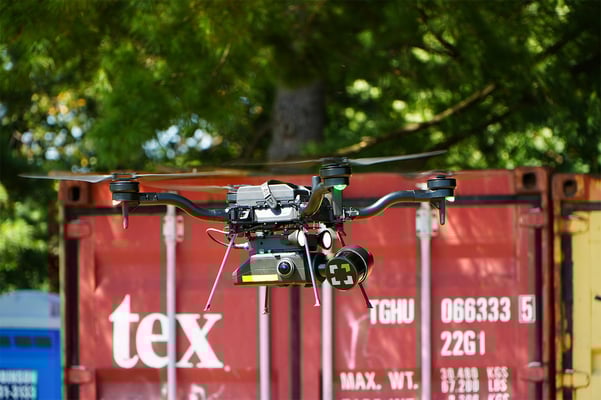
Adding an aerial autonomy license opens up a whole new world of 3D spatial mapping. This package comes with the Drone Link accessory to integrate Nexys onto approved robotic airframes. The autonomy package comes with all the features from the Standard Mapping Package, plus:
Fully Autonomous LiDAR Mapping & Navigation - Proprietary autonomy algorithms, coupled with SLAM-based LiDAR scanning technology deliver survey-grade results without a pilot. The operator simply sets the area to scan and the system determines its own route to ensure complete environmental coverage, detects the 3D environment, and identifies and reasons about obstacles and high-level objectives - even in GPS-denied, hazardous, and unilluminated environments.
Fly-To Mission Mode - The fly-to objective defines a location in space that the robot will try to get to best effort. The robot employs advanced path planning to try and reach the desired location which allows the robot to embark on indirect routes to achieve the objective. This objective is combined with a goal success radius that will allow the placement of the objective to be less sensitive as the robot only needs to get within a certain distance of a XYZ location. If the robot determines that the precise location is inaccessible due to placement in a object or blocked by an obstacle, the objective will be failed and the robot will either return home or to the next programmed objective depending on the mission parameters.
Volumetric Exploration Mission Mode - The volumetric exploration objective is defined as a 3D bounding box of where the user wants to map. The robot employs a frontier based exploration algorithm to maximize LIDAR coverage within the environment thus minimizing shadows and blind spots. The algorithm is robust enough to solve a complex maze should a bounding box be placed around it. Once the robot has seen as much as it can within the bounding box or if a contingency policy is evoked (such as low battery), the robot will return home safely with the data is hand.
Planar Inspection Mission Mode - The planar inspection mission mode is designed for low FOV sensors, such as EO cameras, to collect 100% coverage data on a surface. The inspection plane is defined in the user interface and multiple planes can be sequenced in series to inspect multiple assets / wall / rows / etc.
Battery Aware Return to Home (RTH) - Built in health monitoring always ensures that the robot can get back to home with the available battery reducing the cognitive burden on the operator.
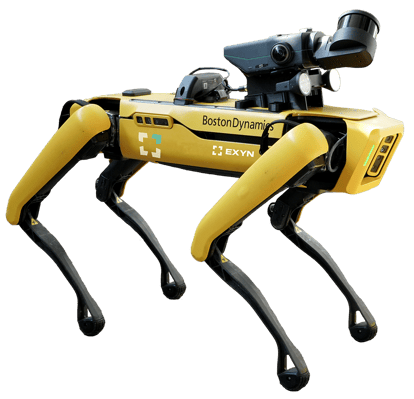
The ground autonomy package for Nexys enables survey teams to explore and map complex environments using an autonomous four-legged robot like Spot, from Boston Dynamics. This package comes with the Drone Link accessory to integrate Nexys onto approved robotic platforms. The ground autonomy package comes with all the features from the Standard Mapping Package, plus:
Fully Autonomous LiDAR Mapping & Navigation - Proprietary autonomy algorithms, coupled with SLAM-based LiDAR mapping technology deliver survey-grade results without an operator in the loop. Simply set the area to scan and the system determines its own route to ensure complete environmental coverage, detects the 3D environment, and identifies and reasons about obstacles and high-level objectives -- even in GPS-denied, hazardous, and unilluminated environments.
Walk-There Mission Mode - The walk-there mission mode defines a location in space that the robot will try to get to. The robot employs advanced path planning to try and reach the desired location which allows the robot to embark on indirect routes to achieve the objective if an obstacle is in the way. This objective is combined with a goal success radius that will allow the placement of the objective to be less sensitive as the robot only needs to get within a certain distance of a XYZ location. If the robot determines that the precise location is inaccessible due to placement in a object or blocked by an obstacle, the objective will be failed and the robot will either return home or to the next programmed objective depending on the mission parameters.
Volumetric Exploration Mission Mode - The volumetric exploration objective is defined as a 3D bounding box of where the user wants to map. The robot employs a frontier-based exploration algorithm to maximize LIDAR coverage within the environment thus minimizing shadows and blind spots. The algorithm is robust enough to solve a complex maze should a bounding box be placed around it. Once the robot has seen as much as it can within the bounding box or if a contingency policy is evoked (such as low battery), the robot will return home safely with the data is hand.
Battery Aware Return to Home (RTH) - Built in health monitoring always ensures that the robot can get back to home with the available battery, reducing the cognitive burden on the operator.

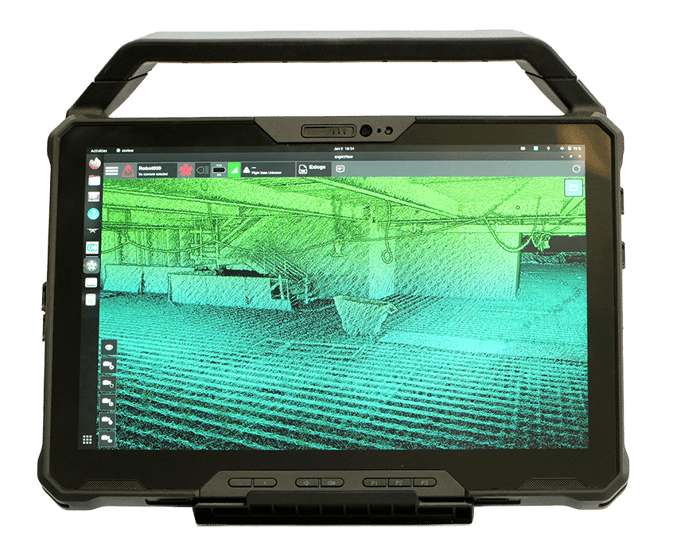
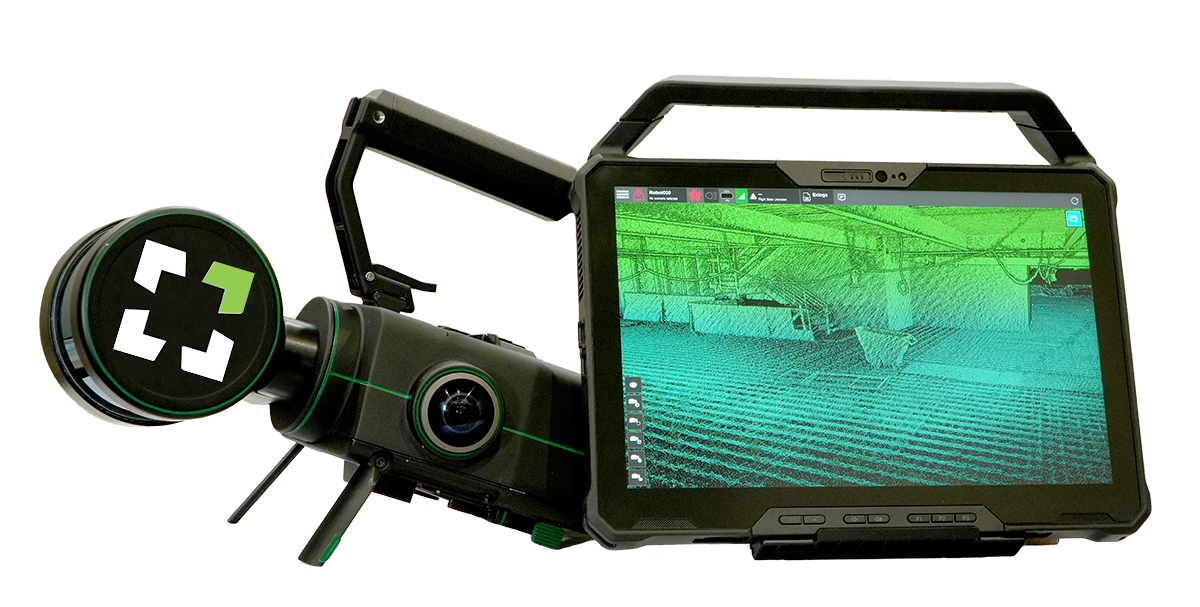
The Nexys comes paired with a ruggedized Dell Latitude tablet for easy mission planning for autonomous aerial exploration missions, or for monitoring the real-time status of a mobile mapping 3D capture - making mobile surveying simple, efficient, and accurate.
Explore ExynView